

The landscape of special education continues to evolve, making it more important than ever for families, educators, and advocates to stay informed. PAVE will share the latest federal developments related to special education, the Individuals with Disabilities Education Act (IDEA), Section 504, the Americans with Disabilities Act (ADA), and other programs and protections that support people with disabilities and their families. As new information becomes available, we’ll share updates to help you better understand what is changing, what has not changed, and how these developments may impact students, schools, and families.
Important: IDEA, Section 504, and the ADA remain federal law. A federal announcement, change in guidance, proposed policy, or action by a federal agency does not automatically change rights established by federal law.
Latest Federal Updates
September 2026: Governor Bob Ferguson and 17 others Call for Continued Protection of Community Integration Rights
On September 3, 2026, Washington Governor Bob Ferguson joined governors from 17 other states in sending a letter to U.S. Attorney General Todd Blanche about federal actions related to Olmstead v. L.C. and the rights of people with disabilities to live, work, learn, and receive services in their communities.
The letter follows two federal developments:
- On June 18, 2026, the DOJ Office of Legal Counsel issued an opinion questioning parts of the legal framework that has been used to implement community integration requirements.
- On July 20, 2026, DOJ stated that it would no longer rely on its 2011 Olmstead guidance in enforcement.
The governors expressed concern that these changes could create uncertainty for states, people with disabilities, families, and the systems that provide home- and community-based services.
Read the September 3, 2026 Governors’ Letter to the U.S. Attorney General
July 30, 2026: Senate Committee Advances S. 5046
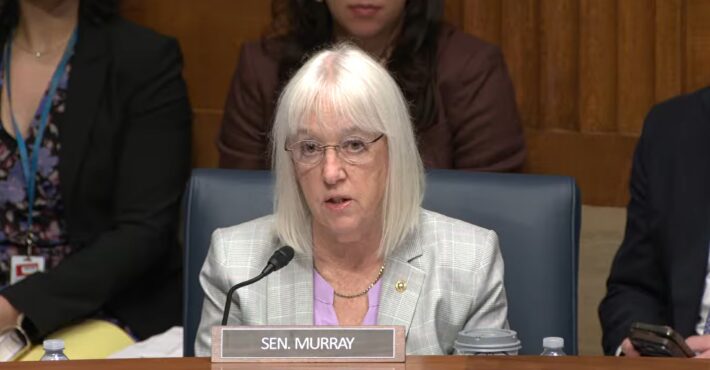
In yesterday’s (7/30/2026) Senate Committee on Health, Education, Labor, and Pension (HELP) Executive Session voted 13-9 to advance Senate Bill 5046 – A bill to prohibit the transfer of certain offices and functions of the Department of Education to other Federal agencies, and for other purposes. “That’s what the special education unit at the Department of Education does – it empowers parents and students at the local level. It teaches all of our students that regardless of your physical ability, regardless of if you can speak or not, regardless of if you sit in a wheelchair…you are a human being with capacity,” said Sen. Hassan (NH). She went on to share that [special education] “makes a difference to millions of lives, to families, and to workforces.” Sen. Murray (WA) stated, “If Secretary McMahon wants to eliminate the Department of Education; she can ask Congress. Until then, an interagency agreement is not a magic wand. She cannot sign away her legal duty to American students.”
S. 5046 now moves to the full Senate for consideration. Advancing out of committee does not mean the bill has passed Congress or become law.
You can listen to the Senate HELP Executive Session, and around 33:21 is SB 5046 which includes dialogue on amendments.
Featured Video: A Message from Acting Assistant Secretary Kelly Rogers, US DOE
In this latest update from the U.S. Department of Education, education leaders discuss current priorities and provide important information related to special education and the implementation of IDEA. The video highlights key initiatives, explains recent developments, and reinforces the Department’s commitment to ensuring students with disabilities receive the services and supports they need to succeed. Whether you’re a parent, educator, or advocate, this update offers valuable insights into the direction of federal special education policy and what it means for schools and families moving forward.