

I Have to Sign What? Healthcare in Transition

When young people turn 18, a lot happens. For instance, in Washington State, 18 is the age when a person legally becomes an adult and must handle tasks and make decisions that used to be made for them by adults.

Adult responsibilities and decisions can feel scary and confusing for the unprepared. Becoming responsible for medical care is part of growing up, and that process is so critical that there’s a specific name for it: healthcare transition.

For example, at age 18, a young adult is responsible for signing official paperwork to authorize procedures or therapies and to pay for co-pays. They must sign documents stating who can look at their medical records, speak with their doctors, or attend an appointment with them. Those rules are part of HIPAA, which stands for the Health Insurance Portability and Accountability Act. HIPAA is a federal law that protects confidentiality, regardless of disability. In this video, young adults living with various disabilities and medical conditions share their journeys through the adult healthcare system. They talk about how they make decisions and how they ask for help. Their ability to explain their needs, make decisions, and speak up for themselves is called self-advocacy. Take a look and listen to what they have to say in their own words!

Learning these skills isn’t something that happens the minute you turn 18. It takes practice to learn how to ask questions at the doctor’s office, to remember to ask about medications, to bring your insurance card. If you are a youth or young adult, those are things you can start early. If you are a caregiver or parent, begin giving your young adult or child questions to ask the doctor when they go in for well-child checks at age 12 or 13. Start talking with them about the conditions they may have and answer any questions they have honestly. If they are aware of why their body is doing what it is doing they can better manage their needs and ask for help when they need it. Help them learn to manage medicine with medicine reminder apps and pill containers. These kinds of things not only set them up for success when they are 18 at the doctor’s office, but also helps them advocate better for what they need in school and the community.

Here are some great sites that provide comprehensive step by step guidance to this process. See what fits best for yourself as a young adult;  parents and guardians can think about what fits your family from their point of view.

  • Got Transition has great tools and videos for youth, families, and providers. Young adults and families developed it, so it is peer-based.
  • Charting the LifeCourse™ was created by families to help individuals and families of all abilities and all ages develop a vision for a good life, including their health care. 
  • The Center for Transition to Adult Health Care for Youth with Disabilities is a national health care transition resource center. The goal of the center is to empower youth and young adults with intellectual and developmental disabilities (ID/DD), ages 12-26, to direct their own transition from pediatric to adult care, with no reduction in quality of care and no gaps in services. 

Including Healthcare Needs and Goals in the Transition Plan

Healthcare transition is often left out of the transition process and left to parents and students to do themselves. Parents, students, and everyone on the IEP team should think about how health and healthcare can affect a student’s goals for college, work, and living on their own. Parents and students can ask that this be a part of the transition plan and can use the resources listed above in the planning process.
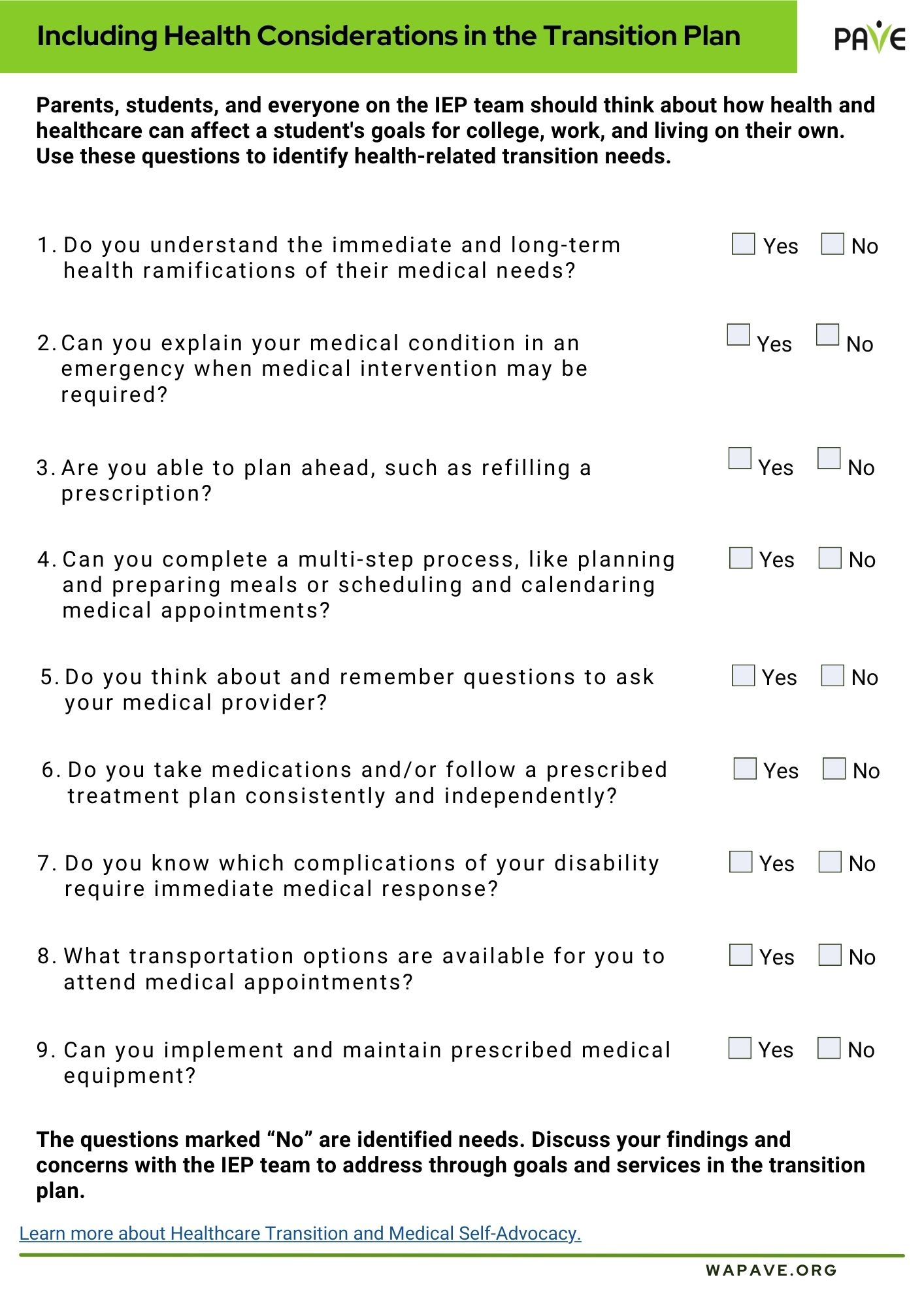
Including Health Considerations in the Transition Plan
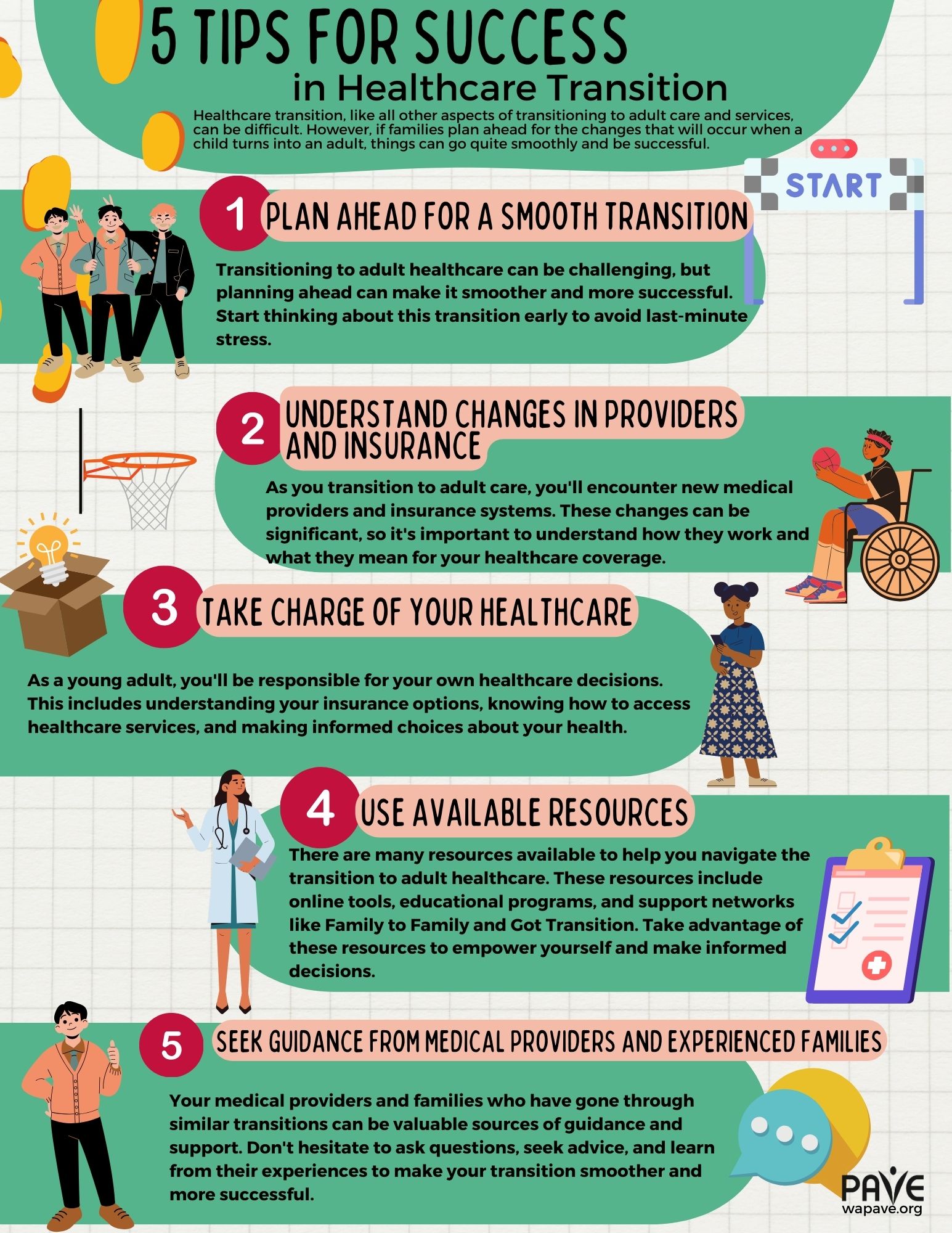
5 Tips for Success in Healthcare Transition

Insurance in Healthcare Transition

Healthcare transition, like all other aspects of transitioning to adult community living, employment, and services, can be difficult. However, if teenagers and families plan ahead for the healthcare changes that occur when a child becomes an adult, things can go more smoothly and successfully. Here are some resources and information to help make the transition to adult care effectively and give young adults more confidence and self-assurance.

There are two main components for individuals transitioning from pediatric (children) to adult health care:

  • New medical providers and systems, including changes in insurance
  • The young adult’s new responsibility of being in charge of their own health care

Health Insurance and Providers

Whether an individual is on Medicaid, Medicare, or private health insurance, eligibility, costs, and covered services may change.

Washington’s Medicaid option, Apple Health, has different financial requirements for adults than it does for minors. The type of Medicaid a youth has before age 18 may change depending on the source of their income or benefits when they turn 18.

If the disability is significant, a student or young person may be on classic Medicaid. When they turn 18, they must contact the managed care organization (MCO) that is their current healthcare provider (Molina, Community Healthcare, Well Point, etc.) and:

  • Confirm who their current healthcare provider is
  • Confirm their own current address

They must do this every 12 months.

If the youth is not

  • on Supplemental Security Income (SSI),
  • receiving Developmental Disability (DDA/DDCS) services,
  • or receiving state benefits for the blind such as Aging, Blind, or Disabled (ABD) Cash Assistance or State Supplementary Payment (SSP),

then they may be on Medicaid through the healthcare exchange, the Washington Health Plan Finder.

At 18, Washington youth are required to apply for or renew Apple Health by going to the Health Plan Finder website.  Even if an individual is not eligible for fully subsidized (paid) healthcare, the Health Plan Finder can reveal some low-priced options. 

Young adults who are on their parents’ private insurance will be covered under their parents’ plan until they are 26, unless the young adult works and are covered through an employer-based plan. When they turn 26, if they are not working and are not covered by SSI/SSDI, DDA/DDCS services, or any other disability based supports, they will need to apply for their own health insurance. Again, the Health Plan Finder can help you find affordable options, including Apple Health.

For individuals under 65 who are receiving Medicare due to a disability, insurance should not change due to the transition to adulthood. It is important to know which doctors can treat an individual’s conditions and whether an insurance plan includes those doctors. To find out, call the MCO/health provider’s helpline or view their website to find out whether those doctors are included in their insurance plan. The doctor’s office will also give information on which plans they accept and which ones they don’t.

Taking on Responsibility for Health Care and Decisions

Healthcare is just one of many new responsibilities that young people take on as they become adults.  Parents can avoid overwhelming a teen with new obligations, by beginning with giving younger teens options and increasing tasks to help them adapt to this change. There are several resources for families and youth to use in this transition:

  • Family to Family has a youth-written curriculum about Transitioning to Adult Doctors to help teens start their medical transition journeys.
  • Charting the LifeCourse™ was created by families to help individuals and families of all abilities and all ages develop a vision for a good life, including their health care.
  • Got Transition is a comprehensive website about the transition to adult health care, with quizzes, FAQs, and timelines to make it easier to understand.
  • The Center for Transition to Adult Health Care for Youth with Disabilities is a national health care transition resource center. The goal of the center is to empower youth and young adults with intellectual and developmental disabilities (ID/DD) ages 12-26 to direct their own transition from pediatric to adult care with no reduction in quality of care and no gaps in service.

Beyond these resources, the most useful resource are young adults themselves. Whether you are a parent/caregiver or a transitioning individual, it’s important to recognize that lived experience provides knowledge, even in a new situation. Parents, caregivers, and young adults have knowledge of medical needs that may not be in a chart. They know about the emotional or behavioral challenges a young person has. They know the youths’ strengths, areas for growth, other important things only an individual and their family know.

Write out what you feel is most important in your health care journey over the next 5 years. What do you need to know from doctors? What do you need to know about school and work? What do you need to know about your condition? Be curious and remember what you have already done to take care of yourself. Ask your parents and caregivers about what they see as important over the next few years. Take the time to explore, then start the transition journey to adult care with an idea of what you would like.

Another group to consult are your current medical providers and specialists. They have helped many other teens transition to adult healthcare, and they are a part of developing the care plan, a critical resource for transitioning to an unfamiliar doctor or clinic when a young adult may have complex care needs. Doctors’ office staff are also used to dealing with these issues and may have some good planning advice for families. Lastly, advice from families who have already helped a child transition to adult care can know what to do and what not to do!  Parent-to-Parent can match parents up with families who have already gone through such transitions with those who seek their knowledge and experience. Informing Families has some good basic resources on its website for getting started.

5 Tips for Success in Healthcare Transition

Including Health Considerations in the Transition Plan

Parents, Students, and everyone on the IEP team should think about how health and healthcare can affect a student’s goals for college, work and living on their own. PAVE has made a fillable form that you can download when starting to think about this area in transition.

Including Health Considerations in the Transition Plan

Download the document Including Health Considerations in the Transition Plan